Kumbh Mela 2026: Date, History, Significance & Complete Travel Guide
Admin ⦁ 20 July 2026 ⦁ 9:00 min read
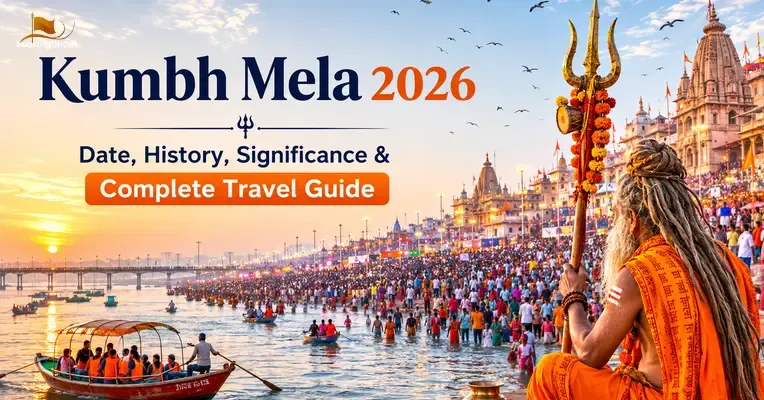
The Kumbh Mela is more than just a religious gathering—it's one of the world's largest spiritual events that brings together millions of devotees, saints, pilgrims, and travelers from across India and around the globe. Rooted in centuries-old traditions, the festival symbolizes faith, devotion, and the timeless spiritual heritage of India.
Every Kumbh Mela transforms its host city into a vibrant center of worship, culture, and community. From the grand processions of saints and Akharas to the sacred ritual of taking a holy dip in the river, every moment reflects the deep beliefs that have been passed down through generations.
If you're planning to attend Kumbh Mela 2026, this guide covers everything you need to know. With the Simhastha Kumbh Mela officially commencing with the Dhwajarohan (Flag Hoisting Ceremony) on October 31, 2026, now is the perfect time to start planning your pilgrimage. In this guide, you'll learn about the Kumbh Mela 2026 date and schedule, its fascinating history, spiritual significance, major rituals, travel tips, and everything you need to make your visit smooth and memorable.
What is Kumbh Mela?
Many people wonder, What is Kumbh Mela? Kumbh Mela is the largest Hindu pilgrimage festival, celebrated at four sacred cities in India:
- Prayagraj (Uttar Pradesh)
- Haridwar (Uttarakhand)
- Ujjain (Madhya Pradesh)
- Nashik (Maharashtra)
The festival is held according to specific planetary alignments described in Hindu astrology. Depending on these celestial positions, the Kumbh Mela rotates among the four holy cities over a cycle of several years.
The main attraction of the festival is the sacred bath in the holy river. Millions of devotees believe that bathing during this auspicious period helps cleanse sins, purify the soul, and bring them closer to Moksha (liberation).
Kumbh Mela 2026-2027 (Simhastha Kumbh Mela: Nashik & Trimbakeshwar)
The Simhastha Kumbh Mela, the Nashik-Trimbakeshwar edition of the Kumbh held once every 12 years, spans a long ritual period rather than a single date:
- Dhwajarohan (flag hoisting, official start): October 31, 2026
- Official conclusion: July 24, 2028
- This makes it roughly a 21 month religious period, though it's commonly referred to as "Kumbh Mela 2027" since that's when the main bathing rituals happen.
Main Amrit Snan / Shahi Snan (Royal Bath) dates, all in 2027
- First Shahi Snan: August 2, 2027
- Second Shahi Snan (considered the most spiritually significant): August 31, 2027
- Third Shahi Snan: September 11, 2027 (some sources list it spilling into September 12)
These are the days when the Akharas (ascetic orders) and millions of devotees take the sacred dip at Ramkund in Nashik and Kushavarta Kund in Trimbakeshwar, on the banks of the Godavari River.
Note: As with your original content, the astrological/Akhara Parishad councils typically confirm exact muhurta timings closer to the event, so treat the day level dates as reliable but the precise auspicious hour as subject to final confirmation.
Kumbh Mela History
According to ancient scriptures, the Devas (gods) and Asuras (demons) worked together to churn the cosmic ocean in search of Amrit, the nectar of immortality. When the sacred pot (Kumbh) containing the nectar emerged, a fierce battle broke out between the two sides.
During this struggle, Lord Vishnu carried the pot to protect it, and drops of the nectar are believed to have fallen at four locations:
- Prayagraj (Magh Mela: January 3 to February 15, 2026)
- Haridwar (next Ardh Kumbh: around March 2027)
- Ujjain (next Simhastha: 2028)
- Nashik (Dhwajarohan/flag hoisting: October 31, 2026; main Shahi Snan dates in 2027)
These four places became the permanent venues for the Kumbh Mela and continue to host the festival in rotation.
Over the centuries, what began as a sacred gathering evolved into one of the largest peaceful congregations in the world. Today, the Kumbh Mela is recognized not only for its religious importance but also for its cultural, historical, and social significance.
Why is Kumbh Mela Celebrated?
Many first-time visitors ask, Why is Kumbh Mela celebrated? For Hindus, the Kumbh Mela is a celebration of faith, devotion, purification, and spiritual awakening.
Devotees believe that taking a holy dip in the sacred river during the auspicious period washes away accumulated sins and helps them move closer to spiritual liberation. However, the festival is about much more than the ritual bath.
It is an opportunity to:
- Seek blessings from saints and spiritual leaders.
- Participate in prayers and religious ceremonies.
- Listen to spiritual discourses.
- Practice meditation and self-reflection.
- Experience India's diverse spiritual traditions.
- Strengthen faith with millions of fellow devotees.
The Kumbh Mela also represents unity, as people from different states, languages, and cultures come together with a shared sense of devotion.
Kumbh Mela Significance
The Kumbh Mela significance extends beyond religion. It represents India's living spiritual heritage and showcases centuries-old traditions that continue to inspire millions.
Spiritual Purification
The holy bath is considered an act of inner purification. Devotees believe it helps cleanse negative karma and promotes spiritual growth.
Gathering of Saints
Thousands of saints, monks, and spiritual organizations gather during the festival. Visitors have the rare opportunity to witness ancient traditions, meditation practices, and philosophical discussions.
Preservation of Culture
The Kumbh Mela is a living example of India's cultural diversity. Religious music, devotional singing, traditional processions, and spiritual teachings all become part of the festival experience.
Community and Service
Many organizations arrange free food distribution, medical camps, volunteer services, and charitable activities, reflecting the values of compassion and selfless service.
Global Recognition
The Kumbh Mela has gained worldwide recognition for its scale and organization. Every edition attracts visitors, researchers, filmmakers, and photographers from around the world who wish to witness this extraordinary spiritual gathering.
Prayagraj Kumbh Mela
Among all four locations, the Prayagraj Kumbh Mela holds special importance because it takes place at the Triveni Sangam, where the rivers Ganga, Yamuna, and the mythical Saraswati meet.
According to Hindu beliefs, this sacred confluence possesses immense spiritual power, making it one of the holiest places for taking a ritual bath.
During the festival, the city transforms into a temporary spiritual township with:
- Pilgrim camps
- Religious discourses
- Cultural performances
- Community kitchens
- Medical facilities
- Security services
- Spiritual exhibitions
The grand processions of various Akharas, led by Naga Sadhus and other ascetics, are among the most spectacular events of the festival.
Witnessing these processions offers visitors a unique glimpse into traditions that have been preserved for centuries.
Major Rituals During Kumbh Mela
The Kumbh Mela is filled with religious ceremonies that continue throughout the festival.
Shahi Snan
The Shahi Snan is the most important event of the Kumbh Mela. On these auspicious dates, saints and members of different Akharas lead magnificent processions toward the river before taking the sacred bath. Devotees consider witnessing the Shahi Snan a once-in-a-lifetime experience.
Holy Dip at the Sangam
Millions of pilgrims gather before sunrise to take a dip in the sacred river while chanting prayers and mantras. This ritual is believed to purify both body and soul.
Spiritual Discourses
Many respected saints and religious scholars conduct sermons on Hindu philosophy, devotion, meditation, and righteous living. These sessions attract thousands of devotees every day.
Bhajans and Kirtans
The festival is filled with devotional music. Temples, camps, and ashrams organize continuous bhajans and kirtans that create a peaceful and spiritually uplifting atmosphere.
Charity and Seva
Acts of kindness form an important part of the Kumbh Mela.
Many devotees participate in:
- Food distribution (Annadanam)
- Medical camps
- Volunteer services
- Donation drives
- Helping elderly pilgrims
These activities reflect the spirit of compassion and selfless service that lies at the heart of Hindu philosophy.
Complete Kumbh Mela Travel Guide
If this is your first visit, proper planning can make your pilgrimage safer, more comfortable, and more meaningful.
Plan Early
Since millions of people attend the Kumbh Mela, flights, trains, buses, and accommodations fill up quickly. Booking your travel several months in advance gives you better options and more affordable prices.
Carry Essentials
Pack light but don't forget:
- Valid ID proof
- Comfortable walking shoes
- Light cotton clothing
- Medicines
- Water bottle
- Mobile charger and power bank
- Small backpack
- Personal hygiene items
Stay Hydrated
You'll spend several hours walking through large crowds. Drink plenty of water and take regular breaks to avoid dehydration.
Follow Official Guidelines
Always follow instructions from local authorities regarding crowd movement, bathing schedules, traffic restrictions, and emergency services.
Respect Local Traditions
The Kumbh Mela is a deeply religious event. Visitors should dress modestly, maintain cleanliness, respect temple customs, and avoid disturbing religious ceremonies or saints.
Travel with Family or Groups
If you're traveling with elderly family members or children, stay together, decide on meeting points, and keep emergency contact numbers readily available.
Book Verified Dharamshalas & Hotels for Your Pilgrimage
Whether you're visiting Prayagraj, Haridwar, Maharashtra, or other sacred destinations, BookingDham offers reliable accommodation options to make your pilgrimage convenient and stress-free.
Accommodations in Maharashtra
Maharashtra is home to some of India's most revered pilgrimage destinations, including Shirdi, Siddhivinayak Temple, Tuljapur, Saptashrungi, and Trimbakeshwar. Whether you're planning a short temple visit or a multi-day spiritual journey, BookingDham helps you find verified accommodations near major religious sites.
Choose from comfortable hotels, dharamshalas, guest houses, and pilgrim-friendly stays suitable for families, groups, couples, and solo travelers.
Available accommodation options include:
- Hotel Morya Lodge (Pune)
- Palange Bhakt Niwas (Tuljapur)
- Metro Residency (Mumbai)
- Swapnashilp Niwas (Saptashrungi)
Explore verified hotels, dharamshalas, guest houses, and family accommodations across Maharashtra on BookingDham and book your stay in just a few clicks.
Accommodations in Prayagraj
Planning your stay is one of the most important parts of your Kumbh Mela journey. During the festival, Prayagraj welcomes millions of devotees, making hotels and dharamshalas fill up quickly. Booking your stay well in advance helps you avoid last-minute hassles and allows you to focus on your spiritual experience.
If you're looking for accommodation in Prayagraj, BookingDham offers verified hotels, dharamshalas, guest houses, and pilgrim-friendly stays suitable for families, groups, couples, and solo travelers.
Available accommodation options include:
Explore verified hotels, dharamshalas, guest houses, and family accommodations in Prayagraj on BookingDham and book your stay near the Triveni Sangam in just a few clicks.
Accommodations in Haridwar
Although Kumbh Mela 2026 will draw significant attention to Prayagraj, Haridwar continues to be one of India's most important pilgrimage destinations throughout the year. Many devotees visiting the Char Dham route or planning future Kumbh journeys also look for accommodation in Haridwar.
With BookingDham, you can choose from hotels, dharamshalas, ashrams, and family accommodations located near Har Ki Pauri and other famous temples.
Available accommodation options include:
Browse hotels, dharamshalas, ashrams, and budget accommodations in Haridwar on BookingDham and reserve your stay near Har Ki Pauri with a quick and hassle-free booking process.
Why Choose Bookingdham?
Planning accommodation during a major pilgrimage can often be challenging, especially during peak travel periods. Bookingdham makes the process easier by bringing together verified accommodations across India's most important religious destinations on a single platform.
Whether you're traveling for Kumbh Mela 2026, visiting Mahakaleshwar Temple in Ujjain, taking a holy dip at Har Ki Pauri, or planning Sangam Snan in Prayagraj, Bookingdham helps you find the right stay based on your preferences and budget.
With Bookingdham, you can:
- Explore verified hotels, dharamshalas, guest houses, homestays, and ashrams.
- Compare room types, prices, and facilities.
- Find accommodations close to temples and pilgrimage sites.
- Choose stays suitable for families, senior citizens, groups, and solo travelers.
- Make secure online reservations before your trip.
Since accommodation fills up quickly during religious festivals, it's always recommended to book accommodation for Kumbh Mela as early as possible.
Tips for a Comfortable Kumbh Mela Journey
A little preparation can make your pilgrimage much more enjoyable.
- Book your accommodation several weeks or months before your travel date.
- Carry a valid ID proof for hotel check-in.
- Wear comfortable clothing and walking shoes.
- Keep drinking water and essential medicines with you.
- Follow the instructions issued by local authorities.
- Avoid carrying unnecessary valuables in crowded areas.
- Travel with family or a group whenever possible.
- Respect local customs, temple rules, and religious traditions.
- Start your temple visits early in the morning to avoid heavy crowds.
Final Thoughts
The Kumbh Mela 2026 is a remarkable celebration of faith, devotion, and India's rich spiritual heritage. From understanding what is Kumbh Mela, learning about Kumbh Mela history, and exploring its deep significance, to witnessing the sacred rituals at the Prayagraj Kumbh Mela, every moment offers a unique spiritual experience.
Planning your journey in advance allows you to enjoy the festival with peace of mind. Along with arranging transportation, securing comfortable accommodation is one of the most important steps for a hassle-free pilgrimage.
Whether you're looking for accommodation in Prayagraj, accommodation in Haridwar, or accommodation in nashik, Bookingdham helps you discover verified hotels, dharamshalas, guest houses, homestays, and ashrams across India's most sacred destinations. By choosing to book accommodation for Kumbh Mela early, you can focus on what truly matters—immersing yourself in the spiritual atmosphere, seeking blessings, and creating unforgettable memories during one of the world's greatest religious gatherings.
FAQs
1. Why is Kumbh Mela celebrated?
Kumbh Mela is celebrated based on the Hindu legend of Samudra Manthan, during which drops of the nectar of immortality (Amrit) are believed to have fallen at Prayagraj, Haridwar, Ujjain, and Nashik. The festival is considered a sacred occasion for devotees to seek spiritual purification, offer prayers, and strengthen their faith.
2. What is the significance of taking a holy dip during Kumbh Mela?
Taking a holy dip in the sacred river is the most important ritual of Kumbh Mela. According to Hindu beliefs, bathing on auspicious dates helps cleanse past sins, purifies the soul, and brings devotees closer to spiritual liberation (Moksha). It is also seen as an act of devotion and renewal of faith.
3. Where is Kumbh Mela held?
Kumbh Mela is held at four sacred cities in India—Prayagraj, Haridwar, Ujjain, and Nashik. The festival rotates among these locations according to specific astrological alignments, making each celebration unique while preserving its spiritual importance.
4. What are the major attractions of Kumbh Mela?
Kumbh Mela offers much more than the holy bath. Visitors can witness the grand Shahi Snan processions, attend spiritual discourses by saints, participate in Ganga Aarti, visit ancient temples, explore cultural exhibitions, and experience one of the world's largest gatherings of faith and devotion.
5. How can I book accommodation for Kumbh Mela 2026?
You can book accommodation through Bookingdham, where you can explore verified dharamshalas, hotels, guest houses, and other stay options near the Kumbh Mela venue. Booking your stay in advance is the best way to secure a convenient location and avoid last-minute availability issues.
6. What should I carry while visiting Kumbh Mela?
It is recommended to carry a valid ID, comfortable clothing, essential medicines, a reusable water bottle, a power bank, and other daily necessities. Traveling light and keeping your valuables secure will help make your pilgrimage more comfortable.
7. Is Kumbh Mela suitable for international tourists?
Yes, Kumbh Mela is open to visitors from around the world. It offers a unique opportunity to experience India's rich spiritual heritage, religious traditions, and vibrant cultural atmosphere. International travelers are encouraged to plan their trip early and arrange accommodation in advance.
8. How many people attend Kumbh Mela?
Kumbh Mela attracts millions of devotees, saints, pilgrims, and tourists during every edition, making it one of the largest religious gatherings in the world. The highest number of visitors usually arrive on the main bathing days, creating an extraordinary spiritual and cultural experience.
9. Why should I choose Bookingdham for Kumbh Mela accommodation?
Bookingdham helps pilgrims find trusted dharamshalas, hotels, and guest houses near Kumbh Mela destinations. With easy booking options and a wide range of accommodations, it makes planning your pilgrimage simpler, more convenient, and stress-free.