Diwali 2026: Date, Puja Timings, Significance, Traditions & Best Places to Celebrate in India
Admin ⦁ 13 October 2026 ⦁ 06:00 min read
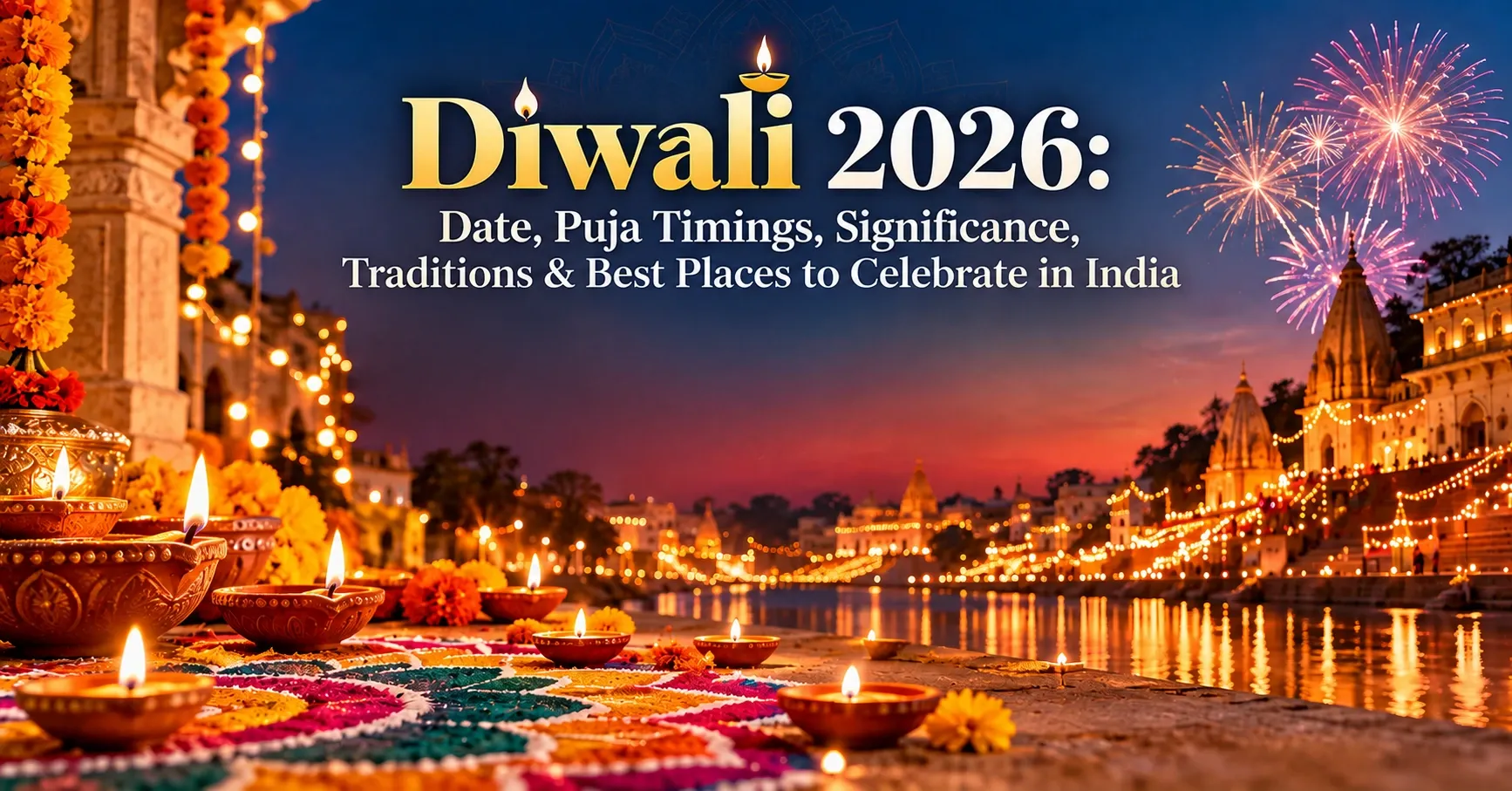
Diwali, also known as Deepavali, is one of India’s most celebrated festivals, bringing together faith, family, traditions and travel. Homes and temples are decorated with diyas, rangoli, flowers and lights, while families perform Lakshmi Puja, exchange sweets and spend time together. In 2026, the main Diwali celebration falls on Sunday, November 8. The festive period also includes Dhanteras, Naraka Chaturdashi, Govardhan Puja and Bhai Dooj. For travellers, Diwali is also a good time to experience temple towns, illuminated ghats and regional celebrations.
This guide covers the Diwali 2026 date, puja timings, significance, traditions and some of the best places to celebrate Diwali in India.
Diwali 2026 at a Glance
Festival | Date in 2026 |
| Dhanteras | Friday, November 6 |
| Naraka Chaturdashi / Choti Diwali | Around November 7–8 |
| Main Diwali & Lakshmi Puja | Sunday, November 8 |
| Govardhan Puja | Around November 9–10 |
| Bhai Dooj | Wednesday, November 11 |
Some observances may vary according to regional customs and local Panchang calculations.
When Is Diwali 2026?
The main Diwali 2026 date is Sunday, November 8, 2026. Diwali is celebrated on Amavasya, or the new moon day, during the Hindu month of Kartika.
The festival is not limited to one day. It is generally observed over five days, beginning with Dhanteras and continuing through Naraka Chaturdashi, Diwali, Govardhan Puja and Bhai Dooj.
Since local lunar calculations and traditions can affect some observances, travellers planning temple visits or religious activities should check the local Panchang and official temple schedules before travelling.
Why Diwali Dates Change Every Year
Diwali does not fall on the same Gregorian calendar date every year because it follows the Hindu lunar calendar. The main Diwali celebration takes place on Amavasya, the new moon day of the Hindu month of Kartika.
The lunar calendar is based on the phases of the Moon, while the Gregorian calendar follows the solar year. Because the two calendar systems do not align exactly, the Diwali date shifts each year when converted into the Gregorian calendar.
Festival dates and puja timings may also vary slightly between cities because traditional Panchang calculations consider factors such as local sunrise, sunset and lunar movements.
This is why travellers should confirm local festival dates and temple schedules when planning a Diwali pilgrimage or religious visit.
Diwali 2026: Five-Day Festival Celebration
Diwali is commonly celebrated over five days, with each day having its own religious and cultural significance.
Dhanteras
Dhanteras marks the beginning of the Diwali festivities. It is associated with prosperity, health and wealth. Many families worship Goddess Lakshmi and Lord Dhanvantari and traditionally purchase household items, jewellery or other new goods.
Naraka Chaturdashi or Choti Diwali
Naraka Chaturdashi, also known as Choti Diwali in many regions, is associated with Lord Krishna’s victory over Narakasura. Traditions vary across different parts of India.
Diwali and Lakshmi Puja
The main Diwali celebration takes place on Sunday, November 8, 2026. Families light diyas, decorate their homes, prepare festive food and perform Lakshmi and Ganesha Puja.
Govardhan Puja
Govardhan Puja is associated with Lord Krishna and the story of Govardhan Hill. The festival has particular importance in Mathura, Vrindavan and several parts of North India.
Bhai Dooj
Bhai Dooj concludes the main Diwali festival period and celebrates the relationship between brothers and sisters.
Diwali 2026 Puja Timings
Lakshmi Puja is one of the most important rituals performed during Diwali. Families worship Goddess Lakshmi, who is associated with prosperity and well-being, along with Lord Ganesha.
The Diwali 2026 Lakshmi Puja timings depend on the city and local Panchang calculations. The auspicious period is generally observed during the evening Pradosh period.
Because puja timings can differ by location, devotees should check a reliable local Panchang before performing Lakshmi Puja or attending temple ceremonies.
What Is Done During Lakshmi Puja?
Common Lakshmi Puja traditions include:
- Cleaning and decorating the home
- Lighting diyas and candles
- Creating rangoli near the entrance
- Offering flowers, fruits and sweets
- Worshipping Goddess Lakshmi and Lord Ganesha
- Performing aarti with family members
- Placing diyas around the home and entrance
For many families and business communities, Lakshmi Puja is an occasion to pray for prosperity, peace and a positive beginning.
Significance of Diwali
The significance of Diwali is connected with several religious stories and traditions followed across India.
One of the best-known traditions is associated with Lord Rama. According to the Ramayana, Lord Rama returned to Ayodhya after fourteen years of exile and defeating Ravana. The people of Ayodhya welcomed Rama, Sita and Lakshmana by lighting rows of lamps.
Diwali is also closely associated with Goddess Lakshmi. In some regions, the festival is connected with Lord Krishna’s victory over Narakasura. Jain and Sikh communities also observe important religious occasions during this festive period.
Together, these traditions make Diwali a festival associated with light, hope, prosperity and the victory of good over evil.
Popular Diwali Traditions in India
Diwali traditions vary across regions, but several customs are widely followed throughout India.
Families light diyas around homes and temples, create colourful rangoli, perform Lakshmi and Ganesha Puja, exchange sweets and gifts, decorate their homes and visit friends or relatives.
Regional celebrations can differ as well. Gujarat has strong business and New Year traditions around Diwali, while Kali Puja is an important observance in West Bengal. Naraka Chaturdashi is particularly significant in several southern states.
These regional differences give Diwali its diverse cultural character.
Best Places to Celebrate Diwali in India
1. Ayodhya
Ayodhya is one of the most significant places to celebrate Diwali in India because of its association with Lord Rama. The city is known for Deepotsav, illuminated ghats and major religious celebrations.
Visitors can also plan darshan at Ram Mandir, Hanuman Garhi and Kanak Bhawan. Since the city attracts large crowds during the festive period, arranging travel and accommodation early is recommended.
2. Varanasi
Varanasi offers a spiritual Diwali experience along the banks of the Ganga. Visitors can attend Ganga Aarti, explore illuminated ghats and visit Kashi Vishwanath Temple.
Travellers staying longer can also plan around Dev Deepawali, which is celebrated after Diwali.
3. Mathura and Vrindavan
Mathura and Vrindavan are suitable for travellers interested in Krishna-related pilgrimage. Popular places include Banke Bihari Temple, ISKCON Vrindavan and Krishna Janmabhoomi.
The festive period allows visitors to combine temple darshan with the spiritual and cultural atmosphere of these pilgrimage towns.
4. Ujjain
Ujjain is home to Mahakaleshwar Jyotirlinga and is an important pilgrimage city in Madhya Pradesh. Travellers can combine Diwali celebrations with Mahakaleshwar Temple darshan and visits to nearby religious sites.
5. Dwarka and Somnath
Travellers planning a Gujarat pilgrimage can consider Dwarka and Somnath. Dwarkadhish Temple and Somnath Temple are major religious destinations that can be included in a festive temple itinerary.
Planning a Diwali pilgrimage? Explore suitable stays with BookingDham and choose accommodation near major temples and local attractions for a more convenient journey.
Famous Temples to Visit During Diwali
Some popular temples to consider during a Diwali pilgrimage include:
- Ram Mandir, Ayodhya
- Kashi Vishwanath Temple, Varanasi
- Banke Bihari Temple, Vrindavan
- Krishna Janmabhoomi, Mathura
- Mahakaleshwar Temple, Ujjain
- Dwarkadhish Temple, Dwarka
- Somnath Temple, Somnath
- Shrinathji Temple, Nathdwara
Temple timings, darshan arrangements and entry procedures may change during major festivals. Always check current temple information before your visit.
Planning Your Diwali Trip With BookingDham
Diwali can bring large numbers of visitors to major pilgrimage cities, so planning your accommodation in advance can make the journey more convenient.
When choosing a hotel or dharamshala, consider its distance from major temples, transport availability, family room options and accessibility for children or senior citizens.
Use BookingDham to explore accommodation options in popular pilgrimage destinations and plan your Diwali 2026 stay before festival demand increases.
Tips for Travelling During Diwali
Keep these practical points in mind when planning your Diwali journey:
- Reserve accommodation early in popular pilgrimage cities.
- Check official temple timings and darshan arrangements.
- Allow additional travel time because roads and temple areas may be crowded.
- Keep booking confirmations and identification documents accessible.
- Wear comfortable footwear for temple visits.
- Keep the itinerary simple when travelling with children or senior citizens.
- Check local weather and transport updates.
- Follow local rules related to fireworks, traffic and public gatherings.
Celebrate Diwali 2026 With a Memorable Journey
Diwali is a time for prayer, family, traditions and celebration. It is also an opportunity to experience some of India’s most important temple towns and cultural destinations.
Whether you want to experience Ayodhya’s festive atmosphere, visit the ghats of Varanasi, explore Krishna temples in Mathura and Vrindavan or plan a pilgrimage to Ujjain, Dwarka or Somnath, planning ahead can make your journey easier.
Planning to travel during Diwali 2026? Explore your destination and stay options with BookingDham and organise your pilgrimage before the festive rush begins.
FAQs About Diwali 2026
When is Diwali in 2026?
The main Diwali celebration falls on Sunday, November 8, 2026. Lakshmi Puja is generally performed in the evening, with exact timings depending on the location.
Why does the Diwali date change every year?
Diwali follows the Hindu lunar calendar rather than the Gregorian calendar. It is celebrated on Amavasya during the month of Kartika, so its Gregorian calendar date changes each year.
What are the five main days of Diwali?
The five main observances are Dhanteras, Naraka Chaturdashi or Choti Diwali, Diwali and Lakshmi Puja, Govardhan Puja and Bhai Dooj.
What is the Lakshmi Puja time for Diwali 2026?
Lakshmi Puja timings vary according to the city and local Panchang calculations. Devotees should check a reliable Panchang for the exact auspicious timing in their location.
Which is the best place to celebrate Diwali in India?
Ayodhya is one of the most prominent destinations because of its connection with Lord Rama and Deepotsav. Varanasi, Mathura-Vrindavan, Ujjain, Dwarka and Somnath are also popular choices for spiritual travel.
How early should I book accommodation for Diwali?
Booking in advance is recommended for popular pilgrimage cities, especially if you want accommodation close to major temples or are travelling with children or senior citizens.