Char Dham Yatra 2026 — Complete Guide: Accommodation, Budget & Best Time
admin ⦁ 02 March 2026 ⦁ 9:10 min read
Introduction
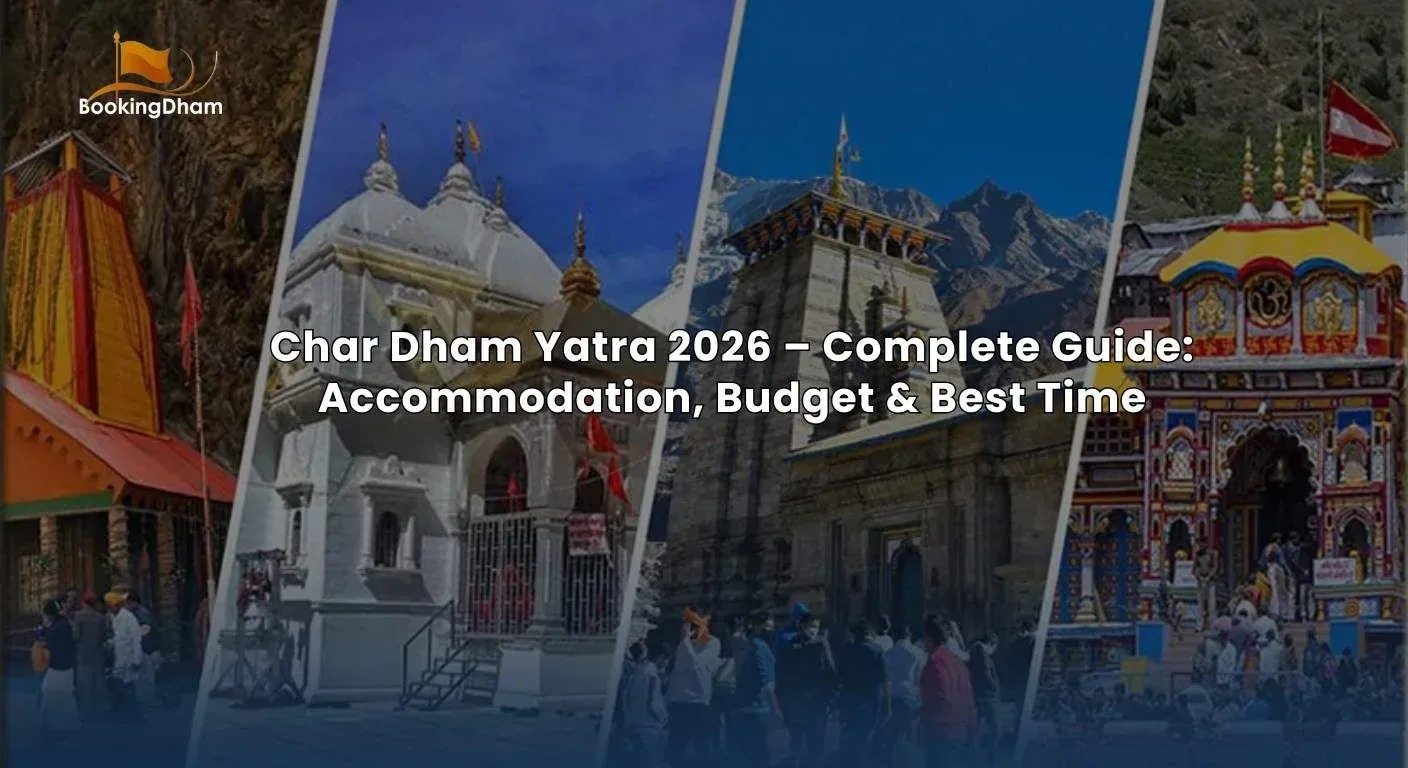
The Char Dham Yatra is not just a journey — it’s a deeply spiritual experience that thousands of devotees wait for every year. Set in the peaceful and powerful mountains of the Garhwal Himalayas, this sacred circuit takes pilgrims to four holy shrines: Yamunotri Temple, Gangotri Temple, Kedarnath Temple, and Badrinath Temple. Each temple has its own story, energy, and spiritual importance, making the entire yatra a once-in-a-lifetime experience.
If you’re planning Chardham Yatra 2026, now is the perfect time to start preparing. Whether you’re travelling with parents, going with a group, or planning a budget-friendly trip, proper planning makes all the difference. From choosing the best time to visit and understanding weather conditions to estimating your travel budget and finding affordable stays, this guide will help you step by step.
And for accommodation, booking early is always a smart decision. You can easily find verified dharamshalas, budget hotels, and guesthouses through BookingDham by comparing prices, checking photos, and reviewing cancellation policies — all in one place.
Quick facts & 2026 dates snapshot
A fast facts list you can pin at the top of your planning checklist:
- The Char Dham are: Yamunotri Temple, Gangotri Temple, Kedarnath Temple and Badrinath Temple.
- Official 2026 opening window (temple kapat/opening): late April — specific temple opening dates in 2026 were announced in April (check local notices before you travel).
- Typical season: late April/May to October/November (closing dates vary by temple).
Best time for Char Dham Yatra 2026
The best time for the Char Dham Yatra 2026 is generally May–June and September–October. Here’s why these windows work best:
- May–June (summer/pre-monsoon) — Weather is the most stable, roads are clear, and mountain views are excellent. Most pilgrims prefer May or early June for good darshan and comfortable daytime temperatures.
- Late September–October (post-monsoon / autumn) — The rains subside and the air is crisp; autumn foliage often creates spectacular scenery and fewer crowds than May–June. However, nights can be colder, and some high-altitude routes may be dustier after the monsoon.
- Months to avoid — July–August are monsoon months in the region and bring risks of landslides, roadblocks and helicopter service disruptions; many travel operators discourage travel during heavy rain.
How to plan the itinerary
Your itinerary depends on time, fitness and whether you’ll use helicopters or road transport. Below are two common approaches: fast-track (7–8 days) and leisure (10–12 days).
Fast-track 7–8 days (best if short on time)
Day 1: Haridwar/Rishikesh arrival — drive to Barkot or Uttarkashi (overnight)
Day 2: Yamunotri darshan and return to Barkot/Uttarkashi (overnight)
Day 3: Drive to Gangotri, darshan, overnight at Gangotri-area guesthouse
Day 4: Drive toward Rudraprayag (overnight)
Day 5: Helipad/taxi to Kedarnath (if using helicopter) or trek from Gaurikund — Kedarnath darshan (overnight)
Day 6: Return to Gaurikund/Rudraprayag — travel to Joshimath/Badrinath approach (overnight)
Day 7: Badrinath darshan — return towards Haridwar/Rishikesh (overnight en route)
Day 8: Drive back to Haridwar — departure
Leisure 10–12 days (recommended for flexibility)
Add rest/acclimatisation days, longer stays at Kedarnath/Badrinath approach towns, and buffer days for weather delays. Families and senior pilgrims recommend this place.
Route Variants & Simple Travel Tips
For senior citizens:
Choose routes that are mostly accessible by road and avoid long treks whenever possible. Book accommodation close to the temple entrance so walking distance is minimal and comfortable.
For solo travellers or small groups:
Shared taxis are a great way to reduce travel costs. Staying in dharamshalas or budget guesthouses can also help you manage your overall yatra budget easily.
Helicopter option for Kedarnath:
Helicopter services to Kedarnath Temple are available and can save a lot of time and physical effort. However, they cost more and bad weather may cancel them, so always keep a backup plan.
Keep buffer days:
- Add at least 1–2 extra days to your itinerary. Weather in the mountains can change fast. Landslides or roadblocks can happen, especially during or after the monsoon season. Even though arrangements improve every year, it’s always better to travel with some flexibility.
Char Dham Yatra 2026 budget accommodation
Accommodation choices define both comfort and cost. Here’s how to decide, plus practical booking tips, including Dharmsala booking online.
Types of stays
- Dharamshalas / Ashrams — community lodging run by trusts or religious groups. Cheapest option (basic bedding, shared bathrooms). Best for pilgrims on a shoestring budget or those who prioritise proximity to temple rituals.
- Budget hotels/guesthouses — private rooms, modest amenities, and better hygiene than basic dharamshalas. Good mid-range value.
- Higher-comfort hotels/resorts — for pilgrims wanting more comfort, especially for families or senior travellers.
Typical INR price ranges (approximate & region-dependent):
- Dharamshala: ₹400–1,200 / night
- Budget hotel/guesthouse: ₹1,000–3,000 / night
- Comfortable hotel/resort: ₹3,000+ / night
How to choose where to stay
- Proximity to temple: Saves time and transport cost on temple days.
- Safety & backup: Check if the property offers luggage storage and a contact number for emergencies.
- Verified photos and reviews: Always prefer properties with recent guest photos and multiple reviews.
Booking tips — Dharamshala booking online
- Book early for May–June and festival windows — rooms fill quickly in peak season.
- Use filters: price, free cancellation, verified photos, and guest ratings. For quick comparisons, search by temple/town, then sort by price or verified rating.
- If you need last-minute rooms, call local guesthouses directly — many keep a few rooms for walk-ins.
Ready to compare dharamshalas and budget hotels for your Chardham Yatra route? Use BookingDham to search by temple and date, filter for price and cancellation, and book verified stays.
Safety & comfort hacks
- If you’re staying in a dharamshala, bring a travel sheet or sleeping bag liner for extra hygiene.
- Senior pilgrims: pick ground-floor rooms and ask for properties with staff assistance to reach temple gates.
Budget breakdown: realistic costs for Char Dham Yatra 2026
Below are sample budgets for a 9–10 day trip (per person, INR). Adjust for group discounts or helicopter legs.
Shoestring (economy): ₹10,000–18,000
- Dharamshala lodging, shared taxis/buses, simple meals, no helicopter.
Moderate Budget (Most Common Choice): ₹25,000–45,000 per person
- This budget range is ideal for most pilgrims. It includes a comfortable mix of budget hotels and dharamshalas, a combination of shared and private taxis for travel between destinations, and 2–3 proper meals per day at local restaurants.
- It offers a good balance between comfort and affordability, making the journey smooth without spending too much.
Comfortable (families/seniors): ₹45,000–80,000+
- Private hotel stays, multiple taxi legs, helicopter options for Kedarnath, more dining flexibility.
Money-saving tips:
- Travel in small groups to split taxi fares.
- Book dharamshalas or budget hotels early for cheaper refundable rates.
- Use local dharamshala kitchens for economical meals (cleanliness permitting).
Permits, health, safety & practical tips
- Permits/registrations: Some routes or services (like local entry passes or specific yatra registration desks) may require registration. In 2026 authorities increased offline registration counters (to smooth flow) — still, check official local notices before travel.
- Altitude & health: Symptoms of mild altitude sickness include headache, nausea and dizziness. Keep hydrated, avoid alcohol, and rest when symptoms appear. Carry basic meds and consult a doctor if severe.
- Travel insurance: Strongly recommended — look for policies covering evacuation and mountain rescue for Himalayan travel.
- Road safety: Carry a copy of ID, keep local emergency numbers, and plan for slow travel on mountainous roads.
Packing checklist & pre-trip checklist
Printable essentials:
- Layered clothing (thermal base, fleece, light jacket)
- Waterproof jacket, sturdy walking shoes, extra socks
- Personal meds, basic first-aid, ORS packets, altitude-relief medication (consult physician)
- ID (Aadhar/passport), printed booking confirmations, temple donation receipts
- Power bank, torch, reusable water bottle, small daypack
- Masks and hand sanitiser
Pre-trip checklist:
- Confirm temple opening dates and local road status.
- Share the itinerary with a contact person, keep emergency cash, and download offline maps for routes with poor networks.
Final Thoughts & Simple CTA
Char Dham Yatra 2026 is more than just a trip — it’s a journey of faith, devotion, and inner peace. With proper planning, the right travel dates, and comfortable accommodation, your yatra can be smooth, safe, and truly memorable. Start preparing early, keep a flexible schedule, and choose stays that match your budget and comfort level.
If you’re planning your Chardham Yatra 2026, explore trusted dharamshalas, budget hotels, and guesthouses through BookingDham. Compare options, check genuine photos, review facilities, and select the stay that suits you best — all in one place.
Plan wisely, travel peacefully, and make this sacred journey a beautiful experience for you and your family.
Om Namah Shivaya 🙏
Char Dham Yatra 2026 – Frequently Asked Questions
1. When will Char Dham Yatra start in 2026?
Char Dham Yatra 2026 is expected to begin in April 2026, with temple openings traditionally scheduled around Akshaya Tritiya. The official dates are announced by the Uttarakhand temple committee a few months before the season starts.
2. What are the opening dates of Char Dham temples in 2026?
- Yamunotri Temple – 19 April 2026
- Gangotri Temple – 19 April 2026
- Kedarnath Temple – 22 April 2026
- Badrinath Temple – 23 April 2026
3. What is the best month to start Char Dham Yatra 2026?
The best months are May and June due to stable weather and clear roads. Another good window is September–October after the monsoon season.
4. When does Char Dham Yatra 2026 end?
The yatra usually closes around October–November 2026, near Diwali, depending on weather conditions and temple committee decisions.
5. Can I visit Char Dham in March 2026?
No, the temples remain closed during winter. The shrines reopen only in April/May after winter closure.
6. Is registration required for Char Dham Yatra 2026?
Yes, pilgrims are usually required to complete yatra registration (online or offline). It is recommended to register before starting your journey.
7. When should I book hotels for Char Dham Yatra 2026?
For April–June travel, book at least 1–2 months in advance, as it is peak season and rooms fill quickly.
Nearby Accommodation
Loading nearby stays...